

Why Interactive Display Speakers Matter for Clear Communication
Interactive display speakers play a critical role in how effectively content is delivered in modern classrooms and meeting spaces. While interactive monitors are often chosen for their visual performance, screen size, resolution, and touch capabilities, audio quality is just as important for ensuring clear communication and engagement. Without clear sound, even the most visually impressive display can fail to deliver its full impact.

The Problem with Low-Quality or Built-In Speakers
Relying on low-quality or built-in speakers can lead to uneven sound distribution, poor clarity, distortion at higher volumes, and increased listening fatigue. Many interactive displays come with basic speakers that are adequate for small rooms but struggle in larger spaces or rooms with poor acoustics. In these environments, sound may be muffled, too quiet in certain areas, or inconsistent across the room.
This can make it difficult for students or participants in the back of the room to follow along, reducing comprehension, attention, and overall engagement. Teachers often compensate by raising their voices, which leads to vocal strain over time and can contribute to long-term voice health issues.
How High-Quality Speakers Improve Communication
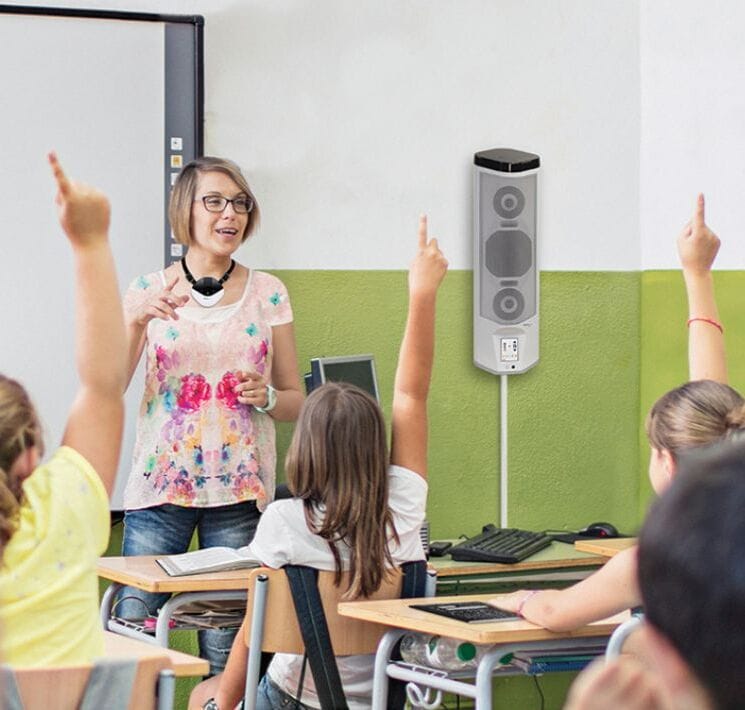
High-quality interactive display speakers ensure that audio is distributed evenly throughout the space, so every voice, video, lesson, and presentation is heard clearly and consistently. This is especially important in education settings, where clear audio supports better learning outcomes, helps students stay focused, and creates a more inclusive environment for students with hearing difficulties or those who process auditory information differently.
When audio is clear and consistent:
- Students can hear instructions without needing repetition
- Multimedia content (videos, audio clips, interactive lessons) becomes more impactful
- Remote or hybrid participants can engage more effectively in hybrid learning setups
- Everyone in the room, regardless of seating position, has equal access to the content

Reducing Vocal Strain for Educators and Presenters
Upgrading or integrating dedicated speaker systems with interactive displays allows educators and presenters to communicate naturally without straining their voice. Instead of constantly projecting their voice to be heard over poor audio or room noise, teachers can speak at a comfortable volume while the speaker system ensures everyone hears clearly.
This not only protects vocal health over time but also makes teaching more sustainable and less exhausting throughout the school day. Presenters in meeting spaces benefit in the same way, being able to lead discussions without voice fatigue.
Enhancing Multimedia and Interactive Experiences
High-quality speakers also enhance multimedia experiences, making lessons more dynamic and impactful. Interactive lessons often include video, audio, sound effects, and real-time collaboration tools — all of which rely on clear audio to work effectively. When speakers are weak or inconsistent, the multimedia experience falls flat, and the interactive elements lose their impact.

Maximising the Value of Your AV Investment
Investing in the right interactive display speakers is a simple yet powerful way to improve clarity, reduce vocal strain, and maximise the value of your AV technology. Many organisations invest heavily in high-end interactive displays but then pair them with inadequate audio, which limits the overall performance of the system. When audio matches the quality of your display, the entire experience becomes more effective, engaging, and accessible.
In short, high-quality interactive display speakers are not just an add-on — they are essential for unlocking the full potential of your interactive technology and ensuring that every voice in the room is heard clearly.